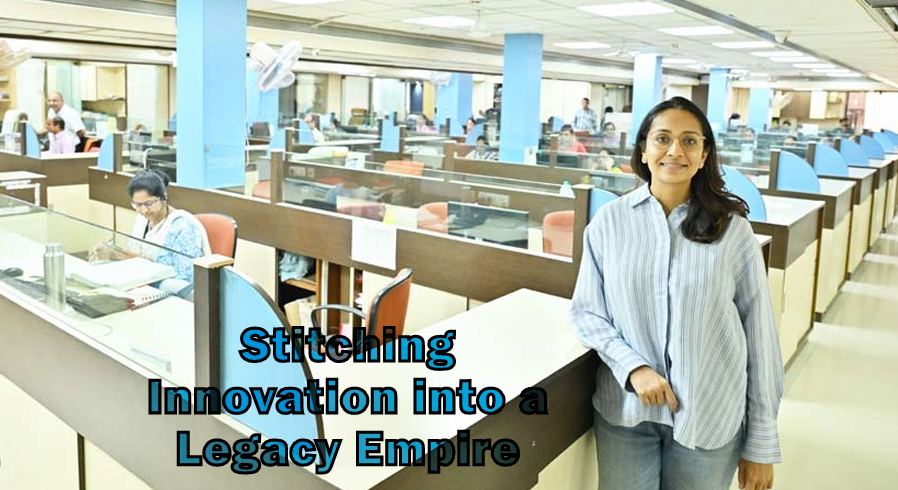
Trading high-fashion PR for the factory floor, modernizing a family legacy, and defying the race to the bottom: The modern leadership of Ms. Nishi Vora.
Nishi Vora is proving that small details command the biggest stage. As the fourth-generation
force behind RCBC, India’s premier Denim Fabrics Supplier & trim manufacturer, Vora talks
with Communion’s R.K. Tripathi about moving from a firm called fashion PR to the family
business, battling global competitors, and bringing AI to the factory floor
Nishi, you pursued a Master’s in Marketing and Strategy in the
UK before returning to Mumbai. What was the most significant
difference you noticed between the Indian and international
education system?
The Indian education system is excellent for building a strong
foundation and teaching you how to retain information. However,
studying abroad shifts the focus to application. Every day, you are
presented with new problems to solve. You learn to work in diverse
teams with people from all over the world. It taught me confidence.
Today, whether I am in a meeting in India, the US, or a country
where I don’t even speak the language, I am confident I can get my
work done.
Before joining RCBC, you spent two years working in Fashion
PR. How did that experience shape your approach to the family
business?
It was a phenomenal foundation. I worked on strategy for major
brands like French Connection, Calvin Klein, and events like Lakme Fashion Week. I was writing press releases, creating content, and
getting a sneak peek at fashion collections six months to a year
before they launched. I had a brilliant boss who taught me the value
of giving 100% and learning from mistakes. However, with a heavy
heart I had to leave PR, but I knew it was the time to step into the
family business.
RCBC is a massive name in the denim fabrics and trim industry.
What changes did you initiate once you came on board?
When I joined, we had a fantastic legacy built by my grandfather,
father, and uncle, but a lot of our business was unstructured
domestic work. A major shift was pivoting toward deep design
consulting with corporate and international brands. Instead of just
taking a design and manufacturing a button, we now sit with a
brand’s design team to understand their upcoming collections. We
show them how the right trims can uplift their entire garment.
Trims have become an incredibly important part of the apparel
narrative
You currently work with 700 to 1,000 brands and manufacture
80% of your products in-house. How do you manage to compete
with China, especially when the Indian market is so price-driven?
China is undeniably our largest competitor. Everything is easier
there due to massive government support and scale; they have
entire area and villeges dedicated just to making buttons! In India,
we had to learn how to build the infrastructure from scratch.
We combat this by refusing the race to the bottom. We never
sacrifice quality for price. As a vegan company producing diverse
trims, we invest heavily in R&D, sustainability, and certifications.
When you focus on being a reliable, high-quality partner,
international business naturally comes to you.


.png "Bharat tex 2026 14 july to 17 july")

.png)
.png)