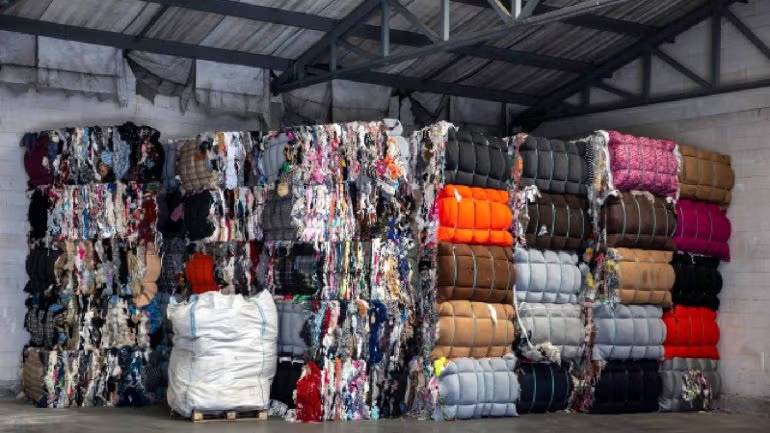
Fashion for Good has introduced Project FAE (Feedstock
Activation Europe) to build the sorting and pre-processing
systems required to convert non-re-wearable post-consumer tex
tiles into textile-to-textile recycling at a larger scale. The project
aims to address a key challenge in textile circularity, making
post-consumer waste a practical and cost-effective raw material
for recyclers.
New recycling facilities being developed across Europe could
help solve this issue by enabling more non-rewearable textiles to
be reused as raw material. However, this can only happen if
proper systems are in place to supply these materials in the
right quantity, quality, and cost. At present, such infrastructure
is still lacking.
“We have been discussing textile circularity for years, and the
reality is that technology is no longer the main issue. The real
challenge lies in basic but essential systems like sorting,
pre-processing, and supply chains that must be in place before
recycling can happen,” said Katrin Ley. “Project FAE focuses on
solving these practical challenges by working closely with
industry stakeholders. If successful, it could help the industry
achieve long-term circularity goals.”
The project is supported by a wide network of industry experts,
including sorting organisations and recycling companies working
across different technologies such as mechanical and chemical
recycling. Additional ecosystem partners are also contributing to
strengthen the initiative and ensure its success.
“Achieving circularity is not just about developing new products.
The bigger challenge is creating the infrastructure needed to
support recycling at scale, including sorting and supply
systems,” said Gudrun Messias. “Project FAE brings together key
players who are committed to working together to make this
system a reality in Europe.”

.png "International Textile Exhibitions")
.png "Bharat tex 2026 14 july to 17 july")
.png)
.png)